The Pharmacist

Mr. Imraan Bismilla is the Responsible Pharmacist and Pharma Division Manager at the Centre for Diabetes & Endocrinology in Houghton, Johannesburg. He holds a B. Pharm degree from Rhodes University. Imraan provides his perspective on and insights into the pharmacist’s crucial role in the diabetes management team.

Who is Mr Imraan Bismilla?

Imraan joined the CDE Pharmacy team in 2018 as the Responsible Pharmacist. His role at the CDE has morphed from dispensing pharmacist to a specialist diabetes care pharmacist. In his role at the CDE, Imraan oversees the introduction of novel diabetes care technologies into the pharmacy and the e-commerce environment at the CDE. Imraan is passionate about diabetes care and, driven by the prospect of improved diabetes outcomes, strives to supply the latest novel continuous glucose monitoring, and insulin pump devices to help change the lives of people living with diabetes. Imraan has presented numerous talks on the role of the pharmacist as part of the diabetes care team, for the PSSA (Pharmaceutical Society of South Africa) and he has represented the PSSA, at the FIP (The International Pharmaceutical Federation) Diabetes in Africa symposium.

Why is it important to include a pharmacist in the Diabetes care team?

The pharmacist is the most accessible member of the health care team. Most people living with diabetes should see their pharmacist at least 12 times a year to collect their chronic medications. This offers the person at least 12 opportunities for meaningful engagement with a knowledgeable Health Care Professional, to explore a range of topics, regarding chronic conditions like diabetes (of course, specialised training and experience is vital to fulfil this role effectively). Two important objectives of chronic health condition management are to control symptoms, and to slow or reduce the risk of disease progression. Pharmacists are ideally positioned, and qualified, to advise people on both pharmacological and non-pharmacological interventions, to improve quality of life, and health condition outcomes. The long-term outcomes of a person living with type 2 diabetes are dramatically improved if the condition can be detected early. Pharmacists can also play a vital role in screening for early detection of chronic health conditions and even in primary prevention efforts.

How do you see your role as part of a diabetes care team?

As a pharmacist in a diabetes care team, my role is multifaceted and critical in ensuring the well-being of people living with diabetes. These are some of the actions I deem essential, for all pharmacists who want to make a difference, in the life of a person living with diabetes.

  • I try at best to optimize my client’s medication management, by identifying and and helping to remove or reduce barriers to adherence.
  • I empower my clients, by educating them on the potential complications of diabetes, and how to reduce the risk of this through optimum self-management and slowing disease progression.
  • I tailor my interactions to meet the specific needs of individuals I engage. Every client is different, with unique challenges to overcome.
  • I recognize the importance of a collaborative approach. I maintain good contact with a range of doctors and allied healthcare professionals (HCPs) and I refer any situation outside my expertise to the relevant HCP.
  • I emphasize the importance of blood glucose management and I keep my clients abreast of the latest monitoring technologies. The importance of maintaining blood glucose levels in an optimal target range is essential in achieving optimal health and wellness.
  • I recognize the potential impact beyond just the clinical setting. Being part of broader community outreach programmes and diabetes education drives, is essential in raising awareness, and curbing the burden of chronic health conditions on care systems.

My number 1 tip for people living with diabetes.

Speak to your community pharmacist. With appropriate specialised training, pharmacists are ideally placed to provide diabetes services, ranging from preventative services to screenings and referrals for pharmacological and non-pharmacological treatments.

Where to find me?

Please visitImraanBismilla.com and reach out. Thank You!

I have never looked at the pharmacist in this way. It just shows how the roles have changed over the years. I am so glad that I could include Imraan’s perspective and insights. I hope this will encourage you to engage with your pharmacist instead of just collecting your medications.

Next week, we have the endocrinologist and podiatrist shedding some light on their roles in the diabetes management team.

Continue the diabetes care and advocacy conversation with ‘not ARTIFICIALLY Sweetened’, a FREE weekly CDE Academy podcast, providing unfiltered reflections on all thing’s diabetes. These podcasts, aimed at both people with diabetes and the health professionals that facilitate their care, offer a free weekly knowledge, attitudes, skills and insight update. Join specialist physician Dr Stan Landau, and diabetes specialist nurse, Michael Brown in building bridges of shared insights between all people touched by diabetes. Now available on Spotify with listeners in 29 countries! If you see value in this podcast, we would appreciate you sharing either of the two image-based adverts attached with any health professional, or person with diabetes you know. If you have any questions, suggestions, comments or contributions for future episodes, please email Stan and Michael @ Podcast@CDEDiabetes.co.za


E xx
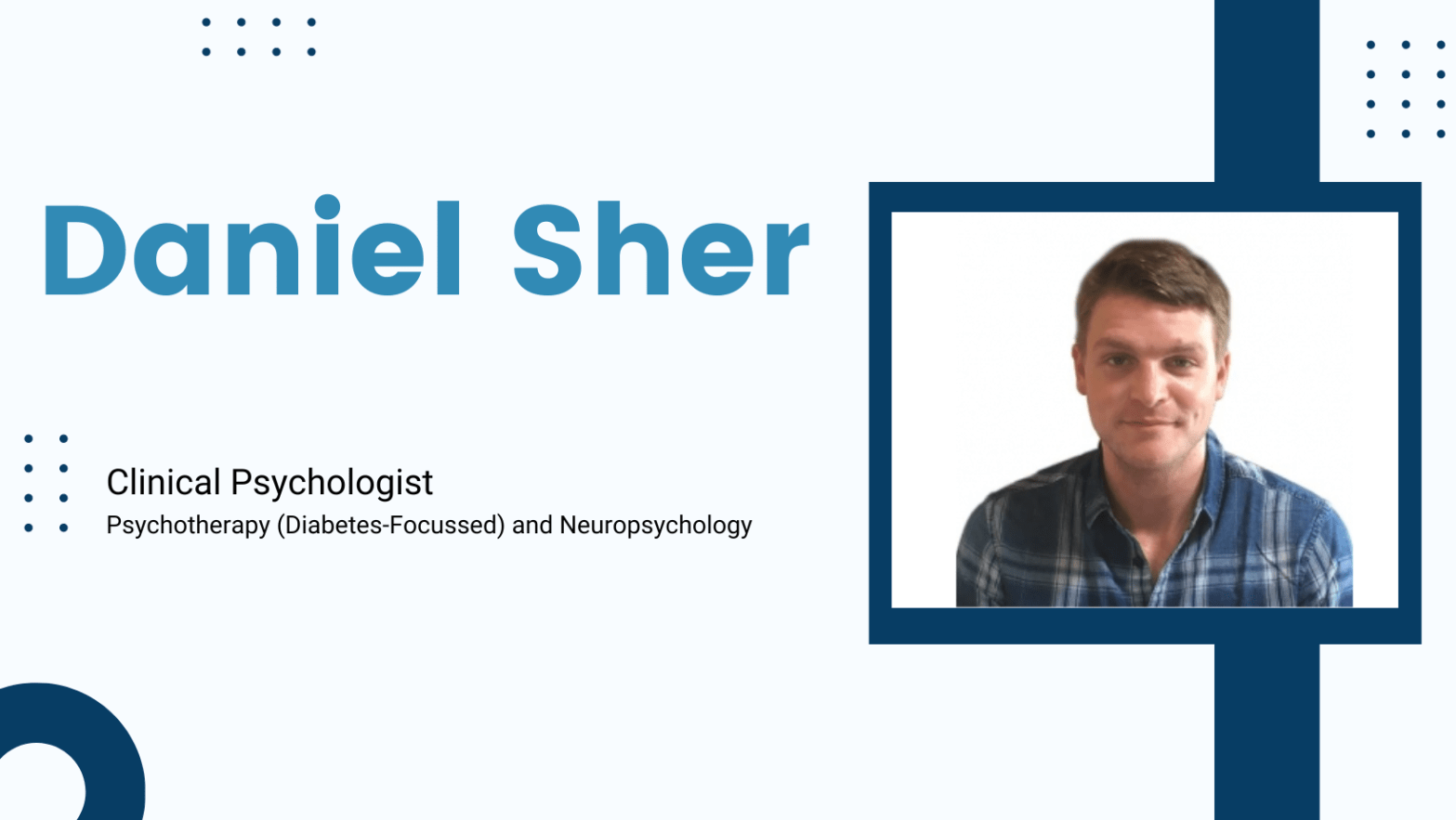
The Clinical Psychologist

Meet Daniel Sher, a Clinical Psychologist registered with the Health Professions Council of South Africa. Having lived with type 1 diabetes for 33 years, Daniel has a special interest in providing diabetes-focussed care. His lived experience, together with his qualifications make him a valuable member of the diabetes management team.

Who is Daniel Sher?

I am a clinical psychologist specializing in diabetes-focused psychotherapy. Living with type 1 diabetes for over 33 years has helped me to appreciate the importance of psychology when it comes to thriving with this condition. My passions in life include family (my lovely wife and cats), surfing, martial arts and studying the brain.  

My work involves providing evidence-based therapeutic support to individuals with type 1 or type 2 diabetes, as well as to their families. While my practice is based in Cape Town, I also offer online consultations to accommodate clients from further afield.

How do you see your role as part of a Diabetes Care Team?

As a psychologist, my role in the Diabetes Care Team is to help individuals navigate the emotional and mental challenges that come with self- and team-management of this condition, enhancing their ability to thrive despite the challenges. I’m also called upon to assist when an individual with diabetes is diagnosed with a co-occurring psychological condition.

Why is it important to include you in the Diabetes Care Team?

My inclusion in the Diabetes Care Team is crucial because managing diabetes is not just about the physical aspects; it’s also about mental well-being. My expertise in psychotherapy provides a holistic approach to diabetes care, addressing the emotional and psychological needs of those living with this condition.

What is you number 1 Tip for Someone Living with Diabetes?

My number one tip for someone living with diabetes is to acknowledge and address the emotional and psychological impacts of the condition. It’s vital to seek support when needed and remember that managing diabetes is a continuous journey that involves both physical and mental health. 

Where can we find you?

I practice in Cape Town, or online. You can contact me through my website (https://danielshertherapy.com/book-a-session/). Please don’t hesitate to reach out.

It’s crucial to look after your mental health while living with a chronic condition. We often overlook that aspect. While we are strong individuals, we also need mental support. Thank you, Daniel, for sharing your insights!

Next, we will chat to the Pharmacist, a greatly underutilised potential resource.

Continue the diabetes care and advocacy conversation with ‘not ARTIFICIALLY Sweetened’, a FREE weekly CDE Academy podcast, providing unfiltered reflections on all thing’s diabetes. These podcasts, aimed at both people with diabetes and the health professionals that facilitate their care, offer a free weekly knowledge, attitudes, skills and insight update. Join specialist physician Dr Stan Landau, and diabetes specialist nurse, Michael Brown in building bridges of shared insights between all people touched by diabetes. Now available on Spotify with listeners in 29 countries! If you see value in this podcast, we would appreciate you sharing either of the two image-based adverts attached with any health professional, or person with diabetes you know. If you have any questions, suggestions, comments or contributions for future episodes, please email Stan and Michael @ Podcast@CDEDiabetes.co.za

E xx

World Diabetes Day 2023

To me, every day is Diabetes Day, as my “diabesties” handle on Instagram suggests. However, yesterday, on November 14, 2023, was World Diabetes Day (WDD), coinciding with the birthday of Sir Frederick Banting, the co-discoverer of insulin. Happy Birthday, Sir Frederick, and I thank you!

The International Diabetes Federation’s theme for World Diabetes Day 2021-23 is “Access to Diabetes Care(1),” with a 2023 focus on “Know your risk, know your response”(2).

(1)highlighting the need for equitable access to essential care, including raising awareness of ways people with diabetes can minimize their risk of potential complications.

(2)emphasizing the importance of knowing your risk for type 2 diabetes to help delay or prevent the condition. It also highlights the impact of potential diabetes-related complications and the importance of having access to the right information and care to ensure timely preventative treatment and management.

 Know the signs:

  1. Needing to pee
  2. Thirst
  3. Hunger
  4. Weight Loss
  5. Exhaustion

I asked my friends and family to join me in creating awareness. Sweetlife ran a campaign where they wanted South Africa to turn blue. Blue it was, my friends! It was lovely seeing one of my favorite colors all over social media. This community mean so much to me. My friends and family also came to the party and represented Diabetes.

I went a bit extra because, why not?

  • I wore blue from head to toe
  • I have blue toenails
  • I styled a bunch of my books reflecting the colour blue
  • I bought snakcs for my husband and I that are wrapped in blue
  • I wore blue earrings

Thank you to each and everyone showing your support by wearing blue. I see you, and I appreciate you.

Happy World Diabetes Day, my diabesties!

Exx

The Diabetes Specialist Nurse Educator

Meet Buyelwa Majikela-Dlangamandla . She is a Registered Nurse and Diabetes Coordinator at Groote Schuur Hospital. Buyelwa is a mother of three and has two grandchildren. She loves music and dancing. Today, she will be sharing her insights with us as part of the diabetes management team.

Who is Buyelwa?

Buyelwa is a registered nurse who obtained her BA Cur degree at the University of South Africa. She has worked in various clinical areas for many years at Groote Schuur Hospital as a professional nurse. In 2000 she joined the Division of Endocrinology and Diabetes Unit, Department of Medicine at the University of Cape Town (UCT) as a Diabetes educator. In 2014 she obtained a master’s degree (MSc) Nursing at UCT and worked as a clinical educator and was involved in several research projects for the chronic disease initiative for Africa (CDIA).

Buyelwa was a member of the diabetes education consultative section of the International Diabetes Federation (IDF) for many years and contributed to the update of the IDF education modules. In 2019 she was a committee member of the 2019 IDF Education and Integrated Care team. She is currently working as Diabetes Co-ordinator at Groote Schuur Hospital.

How do you see your role as part of a Diabetes Care Team?

My role as a diabetes educator is to guide, support and empower people with diabetes with knowledge and skills for effective diabetes self-management. A non-judgemental attitude is crucial as living with diabetes can have many challenges. Creating rapport and safe space for patients is important so that we can understand them better and be able to come up with an individualised action plan.   

Why is it important to include you in the Diabetes Care Team?

The Diabetes Care Team would be incomplete without the Diabetes Educator. Although each member of the Team has a different role, the goal for everyone is the same. In fact, the most important person in the Diabetes Care Team, is the person with diabetes.

What is your number 1 tip for a person living with Diabetes?

You can live healthily with diabetes and achieve your goals in life. Don’t be shy to ask for help and support when needed. 

Where can we find you?

Cell No: 0827473055

Email: Buyelwa.majikela-dlangamandla@uct.ac.za

Next, we will have Daniel Sher sharing his insights as a Clinical Psychologist and a person living with type 1 diabetes.

Continue the diabetes care and advocacy conversation with ‘not ARTIFICIALLY Sweetened’, a FREE weekly CDE Academy podcast, providing unfiltered reflections on all thing’s diabetes. These podcasts, aimed at both people with diabetes and the health professionals that facilitate their care, offer a free weekly knowledge, attitudes, skills and insight update. Join specialist physician Dr Stan Landau, and diabetes specialist nurse, Michael Brown in building bridges of shared insights between all people touched by diabetes. Now available on Spotify with listeners in 29 countries! If you see value in this podcast, we would appreciate you sharing either of the two image-based adverts attached with any health professional, or person with diabetes you know. If you have any questions, suggestions, comments or contributions for future episodes, please email Stan and Michael @ Podcast@CDEDiabetes.co.za

E xx

The Registered Dietitian

Felicity is a part of the CDE family and has a passion for Diabetes Education as well as Carb counting.

Today she shares her insights with us.

Hi, I’m Felicity Black.

I’m a registered dietitian working for the Centre for Diabetes and Endocrinology and the CDE Academy. I hold a Bachelor of Science in Dietetics (4-year degree).

Who is Felicity?

I am a dedicated dietitian with a deep-rooted passion for holistic health and client education. My experience spans various healthcare settings, including hospitals, communities, corporate wellness programmes, and physical rehabilitation facilities. From the evidence and my clinical experience, I subscribe to a multi-disciplinary approach to provide client-centred care and achieve the best possible outcomes. As a facilitator of self-care, I am a strong advocate for empowering my clients to actively participate in their health journeys.

Beyond my work life, I have a particular affinity for fermented foods, and I enjoy experimenting in the kitchen to create nourishing meals. My favourite quote, one by Michael Pollan is, “Don’t eat anything your great grandmother wouldn’t recognize as food”. This reflects my commitment to promoting whole, natural, and wholesome nutrition choices.

How do you see your role as part of a Diabetes Care Team?

In my professional role I can make a significant difference, as lifestyle change is the foundation for the effective management of a wide range of health conditions. Lasting treatment success and improved well-being cannot be achieved without embracing and sustaining lifestyle choices with proven health benefits. While dietary adjustments are a crucial aspect of this transformation, I also emphasize the importance of addressing other vital components, such as regular movement and physical activity, sufficient quality sleep, and management of our exposure to and responses to stress. This holistic approach is key to promoting long-term health and optimum wellness.

Why is it important to include you in the Diabetes Care Team?

I bring a perspective of ‘food freedom’ to the multidisciplinary diabetes care team, emphasizing that individuals with diabetes can enjoy a variety of foods while managing their condition. This approach not only enhances quality of life, but also reduces the sense of restriction and deprivation often associated with diabetes management.

Furthermore, my involvement can lead to a reduced medication burden for our clients as they learn to make better nutrition choices and effectively manage their blood glucose levels and other risk factors. This, in turn, can result in better health outcomes and a reduced risk of potential complications associated with diabetes.

Ultimately, my contribution to the Diabetes Care Team is integral in fostering a holistic and person-centred approach to diabetes management, which focuses on improving the overall wellbeing and quality of life for individuals living with diabetes.

Your top tip for people living with diabetes?

Become an expert on your health by listening to your unique body. Get curious about how your body responds to things like food, exercise and stress. How can you restore balance, how can you nourish yourself? Which foods make you feel good?

Do not miss the insights from the pharmacist, registered nurse and psychologist!

Continue the diabetes care and advocacy conversation with ‘not ARTIFICIALLY Sweetened’, a FREE weekly CDE Academy podcast, providing unfiltered reflections on all thing’s diabetes. These podcasts, aimed at both people with diabetes and the health professionals that facilitate their care, offer a free weekly knowledge, attitudes, skills and insight update. Join specialist physician Dr Stan Landau, and diabetes specialist nurse, Michael Brown in building bridges of shared insights between all people touched by diabetes. Now available on Spotify with listeners in 29 countries! If you see value in this podcast, we would appreciate you sharing either of the two image-based adverts attached with any health professional, or person with diabetes you know. If you have any questions, suggestions, comments or contributions for future episodes, please email Stan and Michael @ Podcast@CDEDiabetes.co.za

E xx

Lurina – A person living with Type 1 Diabetes

Meet Lurina, an individual who has bravely navigated the challenges of type 1 diabetes for over two decades. In her journey, Lurina’s diabetes care team may not be extensive, but her wealth of experience and unwavering determination have shaped her unique perspective on managing this lifelong condition.

An active and influential presence on social media, Lurina is an asset to the diabetes community. Her insights and personal experiences resonate with those who face similar challenges, providing a source of support, inspiration, and a shared understanding. In this account, Lurina generously shares her wisdom and perspective on her diabetes management team, shedding light on her unique and insightful approach to living with type 1 diabetes (T1D).

Who is Lurina?

I consider myself to be a fun-loving and optimistic individual, in love with life and everything that comes with it.

When I was diagnosed with T1D at the age of 16, I lost my spontaneity for a while. It felt as if the word ‘DIABETIC’ was carved into my forehead. I didn’t want to leave the house. As I gained knowledge of my new reality and realized that my T1D didn’t happen because of something I did wrong, it helped me regain the confidence to face the world again. I have no idea why I felt so much shame and guilt after the diagnosis. I guess I just felt like the odd one out, and I wanted everything to go back to the way it was before my diagnosis.

I love traveling and exploring new places. Nature is my happy place, and nature photography gives my heart that warm and fuzzy feeling. I never get tired of the beach and sunsets! Throw my dogs into the mix, and I’m one happy chappy!

I always find myself in a creative space, whether it is creating educational and inspirational content for the diabetes community or dishing up a nice plate of food with a flower on the side for my husband to enjoy… I love adding a personal touch to life.

Who is part of your Diabetes Care Team?

My Diabetes Care Team is not very extensive. When I was diagnosed (23 years ago), I was on my Dad’s medical aid. I had to visit a Diabetes Clinic once a month. I did not enjoy going to the clinic as I was the only teenager there, and most of the attendees had some serious diabetes-related complications, like poor sight or blindness, leg amputations, and kidney problems. It was very gloomy to me. It felt as if I didn’t belong there, and it was super intimidating to see all these people with their health issues, knowing I still had such a long life with T1D ahead of me. I always felt judged when I saw the care team, as if I had done something wrong and they were waiting for me like the principal at school, ready to tear me apart. I know it sounds dramatic, but it made me feel super insecure, and I decided to only visit a doctor if something actually seemed out of place.

I visit my GP every six months to renew my prescription and to do bloodwork. If there are any concerns, we usually schedule a follow-up appointment. I visit an Ophthalmologist every year as I do have a fear of losing my sight. Whenever I feel I need assistance in a certain area, I schedule an appointment with that specific healthcare provider. I find the online diabetes community to be rather helpful when it comes to mental health and burnout concerns, and they are always only a press of a button away. I have no interest in speaking with a psychologist who doesn’t also live or have a close connection with a life-threatening chronic condition because I don’t want someone to say, ‘I understand,’ when they have no way of truly understanding my reality. I know they are trained to ‘understand,’ but no one gets it until

they get it. My husband is very supportive, and he is always ready to assist where necessary or just to sit with me.

I never knew carb counting was a thing. A few years back, I decided to make an appointment with a dietitian to learn more about carb counting. It took a lot of willpower to make that appointment, and when I got to her, she said that carb counting was the worst idea ever and that she was not going to teach me how to carb count. It cost me R960 to not get what I wanted, and the medical aid rejected the claim.

My medical aid covers only a limited number of specialist consultations, so I try to save them for a rainy day when something is really wrong, and I have no other choice than to see a specialist.

I recently turned 40 and decided to make self-care a higher priority, which also means paying more attention to regular visits to a wider range of healthcare professionals, for example, a podiatrist and an endocrinologist.

Why do you think it is important to include the above-mentioned members in your Diabetes Care Team?

Prevention is better than cure, and through regular check-ups, underlying issues can be detected earlier. It also helps to avoid dealing with a significant load of continuous challenges on your own. By combining the expertise of professionals in the field with my lived experience, we can thrive as a team, achieving better results for both short-term and long-term health.

What is something that you wish people knew about living with diabetes?

The intensity of living with type 1 diabetes is not always understood. It is like a broken tap that just keeps dripping and dripping, and you are aware of it all the time. You can’t unhear it; it just keeps dripping and dripping. You can try to fix it, you can try to move away from it, you can try to ignore it, but it keeps dripping… dripping… dripping.

Where can we find you?

I’m mostly active on Instagram @theglucoseglitch.

Also catch me on:

You Tube: The Glucose Glitch

Facebook Private Group: The Glucose Glitch

Tik Tok: theglucoseglitch

Email: TheGlucoseGlitch@GMail.com

Continue the diabetes care and advocacy conversation with ‘not ARTIFICIALLY Sweetened’, a FREE weekly CDE Academy podcast, providing unfiltered reflections on all thing’s diabetes. These podcasts, aimed at both people with diabetes and the health professionals that facilitate their care, offer a free weekly knowledge, attitudes, skills and insight update. Join specialist physician Dr Stan Landau, and diabetes specialist nurse, Michael Brown in building bridges of shared insights between all people touched by diabetes. Now available on Spotify with listeners in 29 countries! If you see value in this podcast, we would appreciate you sharing either of the two image-based adverts attached with any health professional, or person with diabetes you know. If you have any questions, suggestions, comments or contributions for future episodes, please email Stan and Michael @ Podcast@CDEDiabetes.co.za

E xx

Welcome to Diabetes Awareness Month 2023

Welcome to November, my favourite month of the year. It happens to be my birthday month and Diabetes Awareness Month!

People ask me, ‘Who is part of your diabetes management team?’ My answer is my endocrinologist, whom I see twice a year; my dietitian, whom I do not see close to enough; and my ophthalmologist, whom I see once a year. I also see my psychologist once a month and my pharmacist at least twice a month.

I have never seen a podiatrist, or diabetes educator / specialist nurse. I did not even know they existed until a few years ago.

Did you know that a diabetes management team should consist of more than just your GP/endocrinologist and/or dietitian?

A diabetes healthcare team should include the following healthcare professionals for optimal diabetes management:

Endocrinologist or doctor
Registered dietitian
Podiatrist
Psychologist
Diabetes Specialist Nurse Educator
Ophthalmologist

Pharmacist

Importantly, each of these practitioners (besides the Ophthalmologist) should have been specifically trained in diabetes care – their initial training does not equip them for this role. In November, I will explore these professions and their roles in a diabetes healthcare management team.

We have a great line-up of experts in their field who will shed some light on why your team is important.

Our first interviewee will be Lurina, also known as ‘The Glucose Glitch’. She is a person living with type 1 diabetes, and she will share her experiences with her diabetes management team.

Look out for her insights on the 7th of November 2023!

Continue the diabetes care and advocacy conversation with ‘not ARTIFICIALLY Sweetened’, a FREE weekly CDE Academy podcast, providing unfiltered reflections on all thing’s diabetes. These podcasts, aimed at both people with diabetes and the health professionals that facilitate their care, offer a free weekly knowledge, attitudes, skills and insight update. Join specialist physician Dr Stan Landau, and diabetes specialist nurse, Michael Brown in building bridges of shared insights between all people touched by diabetes. Now available on Spotify with listeners in 29 countries! If you see value in this podcast, we would appreciate you sharing either of the two image-based adverts attached with any health professional, or person with diabetes you know. If you have any questions, suggestions, comments or contributions for future episodes, please email Stan and Michael @ Podcast@CDEDiabetes.co.za

E xx

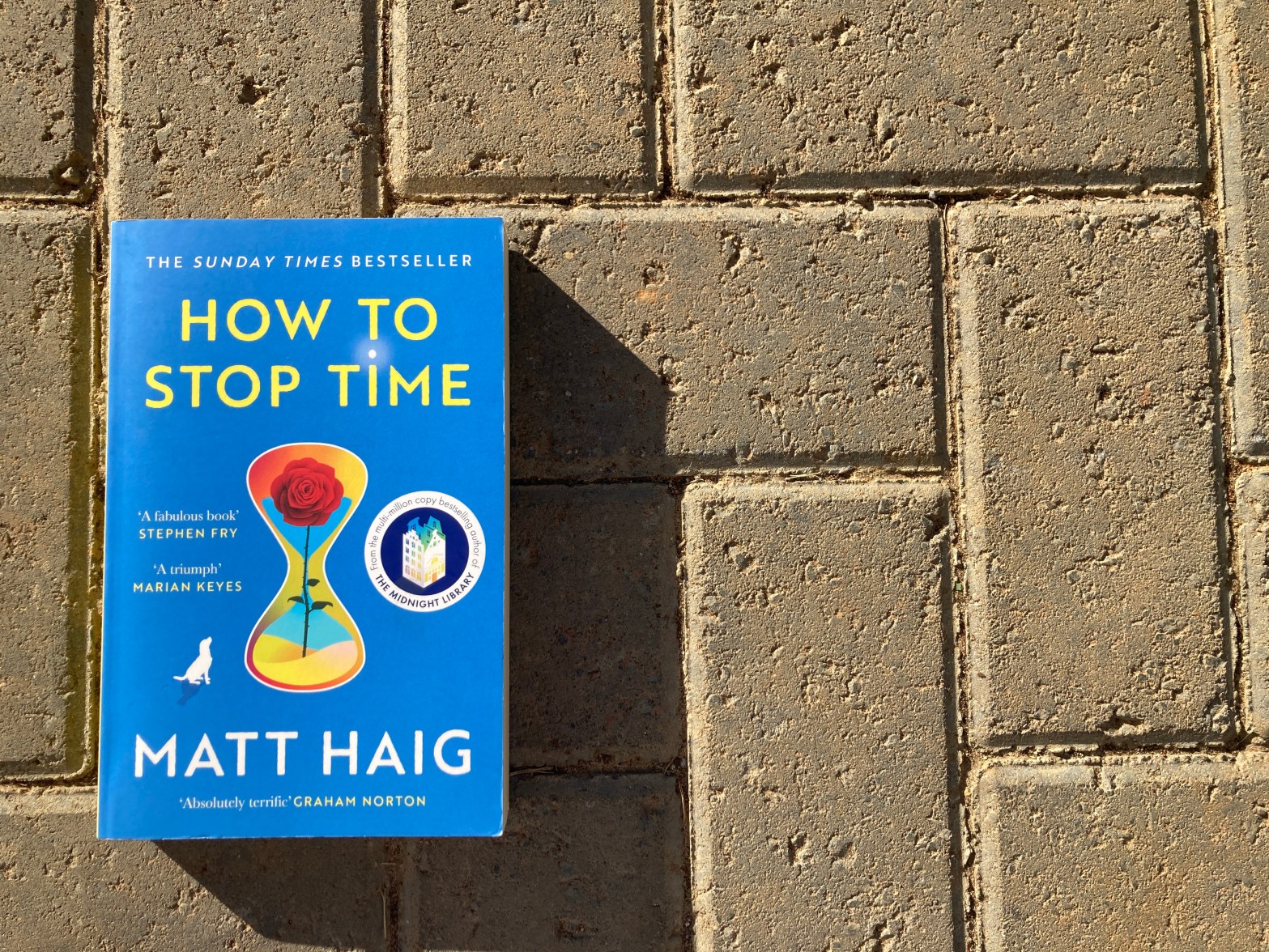
How to Stop Time

Synopsis

HOW MANY LIFETIMES DOES IT TAKE TO LEARN HOW TO LIVE?

Tom Hazard has a dangerous secret. He may look like an ordinary 41-year-old history teacher, but he’s been alive for centuries. From Elizabethan England to Jazz-Age Paris, from New York to the South Seas, Tom has seen it all. As long as he keeps changing his identity he can keep one step ahead of his past – and stay alive. The only thing he must not do is fall in love . . .

But what if the only thing he can’t have is the only thing that might save him?

Source: Matt Haig

Photo by Şahin Sezer Dinçer on Unsplash

My Thoughts

I find living for 100’s of years intriguing. Have you ever thought about what it would be like to live for centuries on end? The concept of immortality is as fascinating as it is perplexing, evoking questions about the purpose of an endlessly long life.

The story takes us on a rollercoaster of time jumps. It takes us through different eras, forcing us to confront the ever-changing nature of life itself. I especially liked this however, I found it difficult settling into a rhythm.

Tom, has a knack for embracing the “poor me” perspective. This makes him almost unlikable, but it is a portrayal of the emotional rollercoaster immortality can be. I find it very strange that a boring ordinary person like Thom met so many famous people. Not entirely impossible, just a bit far-fetched. With 37 years under my belt, I’m yet to meet a history-changing celebrity. The skepticism is real!

The story’s lack of a clear plot and somewhat underdeveloped characters could deter some readers. But midway through the book, the pace picks up, and the story becomes gripping.

Matt has the ability to write a story that is thought provoking. Even if the story is not all you hoped it was going to be.

In this sense, the story accomplishes this—it nudges us to reflect on the wonder of immortality and life.

People you love never die. That is what Omai had said, all those years ago.
And he was right. They don't die. Not completely. They live in your
mind, the way they always lived inside you. You keep their light alive. If
you remember them well enough, they can still guide you, like the shine of long-extinguished stars could guide ships in unfamiliar waters. If you stop
mourning them, and start listening to them, they still have the power to change your life. They can, in short, be salvation.

“…THE WAY YOU STOP TIME IS BY STOPPING BEING RULED BY IT.” Page 325

History was, is, a one-way street. You have to keep walking forwards, but you don’t always need to look ahead. Sometimes you can just look around and be happy right where you are.

…we aren’t just who we are born. We are who we become. We are what life does to us.

All this being said, I can not stop thinking about this book. It is not a 4- or 5 star book, but it was enjoyable.

I gave it a 3 star. See my rating system here.

Have you read it? If so, what did you think?

E xx

Exploring the Friendship Rooms in Your Home

In today’s digital age, social media has become an integral part of our lives. For me as with many of us, it’s a love-hate relationship. It is resourceful while also overwhelming us with a cacophony of noise. I’ve shut down my Instagram not once but twice and started a new account for the third time. 3rd time’s a charm I guess.

This  is not the main focus of the message today but forms an integral part.

One of the challenges I’ve encountered is the struggle to differentiate between ‘real’ and online friends. It might sound strange to think about this, but I believe it’s a valid subject to explore. It brings me to an interesting thought: why don’t we apply the principles of minimalism to our social circles, just as we do to our homes?

The minimalist movement encourages us to de clutter our living spaces and simplify our lives, but what if we extend this philosophy to the people we surround ourselves with? I’m not suggesting that we should limit our friendships to 5 friends, just as we might limit our kitchen items to 5. Instead, let’s consider periodically cleaning up our friends’ list – both online and offline – to find clarity and purpose in our social connections.

A few years ago, Our reverent shared a beautiful perspective on this, and it’s such an interesting way to look at the different layers of our connections.

Porch Friends: The Porch is where you’ll find most of the people in your life, kind of like your digital space. Think of your Facebook and Instagram friends, and even the friendly faces you pass in the mall or on the street. You might not see them often, but you exchange pleasantries. They’re the colleagues at work or acquaintances.

Living Room Friends: In the Living Room, you invite friends over for a nice chat and socialising. These friends are a bit more intimate, and you might share some personal details with them. They’re fewer than your ‘Porch’ friends because these relationships require more time and effort.

Kitchen Table Friends: Your Kitchen Table is a special place. Here, you gather with close friends who you trust deeply. These are the people you share your secrets, dreams, and fears with. They make up a smaller, more select group compared to your Living Room friends.

Bedroom Friends: Your most cherished space is the Bedroom. These are the people you consider family and the very few who’ve earned the title of “soul mate” friends. They’ve been with you since birth, school, university, or you’ve met them recently, but the connection is profound. These friends know your most intimate details, your hopes, dreams, and deepest secrets.

This message resonated deeply with me.

I used to want all my friends and acquaintances to be “bedroom friends,” people who knew me inside out, shared my dreams, and connected with me on a profound level. I believed that the digital world could make this a reality, but as time went by, I realized that true friendship extends beyond the virtual realm and requires physical presence. The tendency to over share my life with everyone, treating each acquaintance as an intimate confidant, led to some heartache over the years.

So, how did I fix this and start protecting myself without sacrificing my desire for deep connections?

I periodically sifted through my friends and followers, assessing the value they added to my life. If a connection left me feeling sad, stressed, or negative, it was time to let go. I unfollowed, unfriended, or muted those who didn’t contribute positively to my well-being.

 Instead of pursuing quantity, I shifted my focus to quality. I sought to interact with individuals who inspired, encouraged, and uplifted me. By doing so, I cultivated a circle of friends who not only made me happy but also added value to my life.

Oversharing had been my downfall, but I learned to be more mindful of the content I shared. Instead of pouring my heart out on every platform, I began to reserve my innermost thoughts and experiences for trusted friends who had proven their worth.

The journey toward minimalism and protecting myself from oversharing was not a one-time process; it’s an ongoing commitment. It’s about maintaining a physical and digital space that aligns with my values and offers peace, inspiration, and authenticity.

Each of these friendship spaces is unique and valuable in its own way. As you navigate life, remember to appreciate and nurture the connections that matter most, from your Porch to your Bedroom.

Have something to share or add – leave me a comment.

E xx

Cover Image: Evelyn Paris – Unsplash

37 Level Up! Happy Diaversary to Me!

Today marks 37 years of living with type 1 diabetes. I won’t sugarcoat it (pun intended), this journey has been far from easy. There have been moments when I’ve despised the constant monitoring, the insulin injections, and the ever-present worry about blood sugar levels. But despite the hardships, these last few years have brought me something invaluable.

I’ve found my voice, not just for myself but for countless others living with diabetes. I’ve become an advocate, a source of support, and a shoulder to lean on for those who share this challenging path with me.

In my journey, I’ve crossed paths with remarkable individuals. From them, I’ve learned invaluable lessons about resilience, perseverance, and the unwavering human spirit.

The last time someone asked me for tips on how to navigate life with diabetes, here was my response:

  • You are a human first and then you have Diabetes. It doesn’t define you.
    Dr. Seuss said the following:

“Today you are you, that is truer than true. There is no one alive who is youer than you.”

  • Language use matters. Change the way you think and talk about Diabetes.
  • Living with Diabetes is not a tennis game, it’s a team sport like hockey. Everyone must work together for the same goal. This is why you have a team of Health Care Professionals.
  • Don’t keep quiet. If something bothers you, say it. You are 1 person but your voice has an impact. We need to end the stigma and we are doing this by speaking up. #advocate
  • Never stop asking questions. The more you know the better you can manage.
  • Food is your friend. Understanding how this benefits your body will open worlds for you.
  • Look after your mental health. It is more important than you think.
  • Last but not least, your diabuddies are your diabesties. Find your community and spend as much time as possible with them. Even if you are just an observer.

While I won’t pretend that living with diabetes is a walk in the park, it’s a journey that has given me purpose, strength, and the opportunity to connect with incredible individuals. Together, we navigate the highs and lows, proving that even in the face of adversity, we can thrive. Here’s to another year of resilience and growth in the face of this relentless condition.

Happy 37th Diaversary to me!

Cheers

E xx